Genre
Genre is any form or type of communication in any mode (written, spoken, digital, artistic, etc.) with socially-agreed upon conventions developed over time. Genre is most popularly known as a category of literature, music, or other forms of art or entertainment, whether written or spoken, audio or visual, based on some set of stylistic criteria, yet genres can be aesthetic, rhetorical, communicative, or functional.History
History is the study of the past as it is described in written documents. Events occurring before written record are considered prehistory. It is an umbrella term that relates to past events as well as the memory, discovery, collection, organization, presentation, and interpretation of information about these events.critical approaches
Ways of approaching popular fiction. As with more conventional forms of literary criticism, Popular Fiction raises issues about how you go about discussing, analysing and interpreting texts. Major approaches to Popular Fiction have included the sociological, the literary, the ideological, the formalist and structuralist approaches, in addition to various psychological, gender-based, reader-response, and deconstructionist approaches.
website: https://www.slideshare.net/JhengReyes/critical-approaches-types-of-literary-criticism
What is Literature?
In the attempt to define the term 'literature', one can distinguish between two general directions: a broad and a narrow definition. The broad definition incorporates everything that has been written down in some form or another, i.e., all the written manifestations of a culture (hence, there are terms such as 'research literature', 'the literature on civil rights', etc.). Needless to say that such a broad definition is problematic as it does not really facilitate communication about the topic. Furthermore, this concept neglects the fact that in many cultures in the past and for a number of indigenous peoples today, literature has not been captured in written media but has been passed down in a long oral tradition of storytelling, myths, ritual speeches, etc. Attempts to come up with a narrow definition have, however, led to such a diversity of approaches that one can hardly talk about 'the' narrow definition.
Why IS LITERATURE IMPORTANT?
Works of literature, at their best, provide a kind of blueprint of human civilization. From the writings of ancient civilizations like Egypt, and China, to Greek philosophy and poetry, from the epics of Homer to the plays of Shakespeare, from Jane Austen and Charlotte Bronte to Maya Angelou, works of literature give insight and context to all the world's societies. In this way, literature is more than just a historical or cultural artifact; it can serve as an introduction to a new world of experience.
Young Adult
the works in this category.
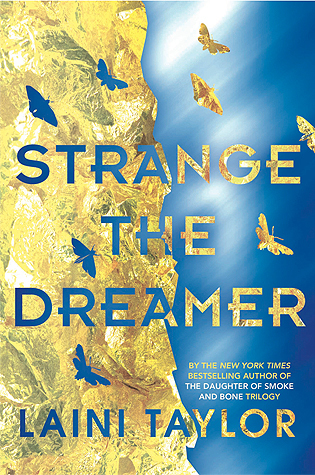
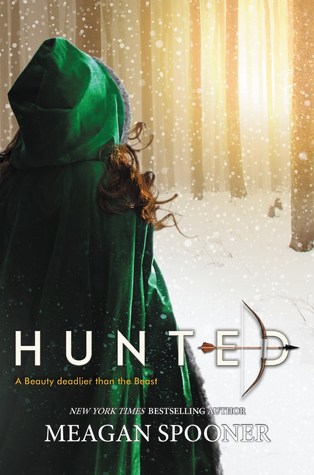

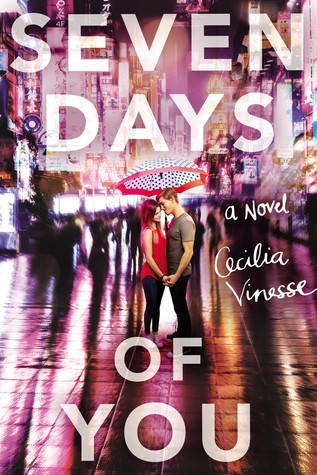
Problem Novel
The social novel, also known as the social problem (or social protest) novel, is a "work of fiction in which a prevailing social problem, such as gender, race, or class prejudice, is dramatized through its effect on the characters of a novel". More specific examples of social problems that are addressed in such works, include poverty, conditions in factories and mines, the plight of child labor, violence against women, rising criminality, and epidemics because of over-crowding, and poor sanitation in cities.
Lie to Me
Lie to Me (stylized as Lie to me*) is an American crime drama television series. It originally ran on the Fox network from January 21, 2009 to January 31, 2011. In the show, Dr. Cal Lightman (Tim Roth) and his colleagues in The Lightman Group accept assignments from third parties (commonly local and federal law enforcement), and assist in investigations, reaching the truth through applied psychology: interpreting microexpressions, through the Facial Action Coding System, and body language.



Bonnie and Clyde
Bonnie and Clyde is a 1967 American biographical crime film directed by Arthur Penn and starring Warren Beatty and Faye Dunaway as the title characters Clyde Barrow and Bonnie Parker. The film features Michael J. Pollard, Gene Hackman, and Estelle Parsons, with Denver Pyle, Dub Taylor, Gene Wilder, Evans Evans, and Mabel Cavitt in supporting roles. The screenplay was written by David Newman and Robert Benton. Robert Towne and Beatty provided uncredited contributions to the script; Beatty also produced the film. The soundtrack was composed by Charles Strouse.

Thelma and Louise
Thelma & Louise is a 1991 American road film directed by Ridley Scott and written by Callie Khouri. It stars Geena Davis as Thelma and Susan Sarandon as Louise, two friends who embark on a road trip with disastrous consequences. The supporting cast include Harvey Keitel, Michael Madsen, and Brad Pitt, whose career was launched by the film.


Bildungsroman
In literary criticism, a Bildungsroman (German pronunciation: [ˈbɪldʊŋs.ʁoˌmaːn]; German: "novel of formation, education, culture"), novel of formation, novel of education,or coming-of-age story (though it may also be known as a subset of the coming-of-age story) is a literary genre that focuses on the psychological and moral growth of the protagonist from youth to adulthood (coming of age), in which character change is extremely important.
The Catcher in the Rye
The Catcher in the Rye is a 1951 novel by J. D. Salinger. A controversial novel originally published for adults, it has since become popular with adolescent readers for its themes of teenage angst and alienation. It has been translated into almost all of the world's major languages. Around 1 million copies are sold each year with total sales of more than 65 million books. The novel's protagonist Holden Caulfield has become an icon for teenage rebellion. The novel also deals with complex issues of innocence, identity, belonging, loss, and connection.

J. D. Salinger
Jerome David "J.D." Salinger (/ˈsælᵻndʒər/; January 1, 1919 – January 27, 2010) was an American writer who is known for his widely-read novel, The Catcher in the Rye. Following his early success publishing short stories and Catcher in the Rye, Salinger led a very private life for more than a half-century. He published his final original work in 1965 and gave his last interview in 1980.

Antihero
An antihero, or antiheroine, is a protagonist who lacks conventional heroic qualities such as idealism, courage, or morality. These characters are usually considered "conspicuously contrary to an archetypal hero".

Coming-of-age story
In genre studies, a coming-of-age story is a genre of literature and film that focuses on the growth of a protagonist from youth to adulthood ("coming of age"). Coming-of-age stories tend to emphasize dialogue or internal monologue over action, and are often set in the past. The subjects of coming-of-age stories are typically teenagers. The Bildungsroman is a specific subgenre of coming-of-age story.Wilhelm Stekel
Wilhelm Stekel (German: [ˈʃteːkəl]; March 18, 1868 – June 25, 1940) was an Austrian physician and psychologist, who became one of Sigmund Freud's earliest followers, and was once described as "Freud's most distinguished pupil". According to Ernest Jones, "Stekel may be accorded the honour, together with Freud, of having founded the first psycho-analytic society"; while he also described him as "a naturally gifted psychologist with an unusual flair for detecting repressed material." He later had a falling-out with Freud, who announced in November 1912 that "Stekel is going his own way". His works are translated and published in many languages.
Echoes of the Rainbow
Echoes of the Rainbow (Chinese: 歲月神偷; Jyutping: Seoi3 Jyut6 San4 Tau1; romanisation: Shui Yuet Sun Tau; literally "Time, the Thief") is a 2010 Hong Kong drama film directed by Alex Law and starring Simon Yam and Sandra Ng. It won the Crystal Bear for the Best Film in the Children’s Jury "Generation Kplus" category at the 2010 Berlin Film Festival.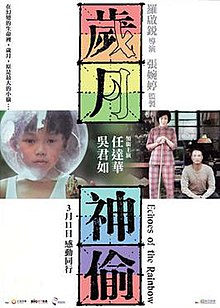


Anemia
Anemia, also spelled anaemia, is usually defined as a decrease in the total amount of red blood cells (RBCs) or hemoglobin in the blood. It can also be defined as a lowered ability of the blood to carry oxygen. When anemia comes on slowly, the symptoms are often vague and may include feeling tired, weakness, shortness of breath or a poor ability to exercise. Anemia that comes on quickly often has greater symptoms, which may include confusion, feeling like one is going to pass out, loss of consciousness, or increased thirst. Anemia must be significant before a person becomes noticeably pale. Additional symptoms may occur depending on the underlying cause.

Robert Burns
Robert Burns (25 January 1759 – 21 July 1796), also known as Rabbie Burns, the Bard of Ayrshire, Ploughman Poet and various other names and epithets, was a Scottish poet and lyricist. He is widely regarded as the national poet of Scotland and is celebrated worldwide. He is the best known of the poets who have written in the Scots language, although much of his writing is also in English and a light Scots dialect, accessible to an audience beyond Scotland. He also wrote in standard English, and in these writings his political or civil commentary is often at its bluntest.
Auld Lang Syne
"Auld Lang Syne" (Scots pronunciation: [ˈɔːl(d) lɑŋˈsəin]: note "s" rather than "z") is a Scots poem written by Robert Burns in 1788 and set to the tune of a traditional folk song (Roud # 6294). It is well known in many countries, especially in the English-speaking world, its traditional use being to bid farewell to the old year at the stroke of midnight. By extension, it is also sung at funerals, graduations and as a farewell or ending to other occasions. The international Scouting movement, in many countries, uses it to close jamborees and other functions.

Haggis
Haggis is a savoury pudding containing sheep's pluck (heart, liver and lungs); minced with onion, oatmeal, suet, spices, and salt, mixed with stock, traditionally encased in the animal's stomach though now often in an artificial casing instead. According to the 2001 English edition of the Larousse Gastronomique: "Although its description is not immediately appealing, haggis has an excellent nutty texture and delicious savoury flavour".

The Carpenters
The Carpenters were an American vocal and instrumental duo consisting of siblings Karen and Richard Carpenter. Producing a distinctively soft musical style, they became one of the best-selling music artists of all time. During their 14-year career, the Carpenters recorded 11 albums, 31 singles, five television specials, and a short-lived television series. Their career ended in 1983 by Karen's death from heart failure brought on by complications of anorexia. Extensive news coverage surrounding the circumstances of her death increased public awareness of eating disorders.

Robert Louis Stevenson
Robert Louis Balfour Stevenson (13 November 1850 – 3 December 1894) was a Scottish novelist, poet, essayist, and travel writer. His most famous works are Treasure Island, Kidnapped, Strange Case of Dr Jekyll and Mr Hyde, and A Child's Garden of Verses.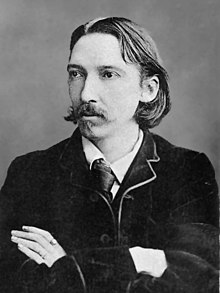
website: https://www.poemhunter.com/robert-louis-stevenson/
Catch Me If You Can
Catch Me If You Can is a 2002 American biographical crime film based on the life of Frank Abagnale, who, before his 19th birthday, successfully performed cons worth millions of dollars by posing as a Pan American World Airways pilot, a Georgia doctor, and a Louisiana parish prosecutor. His primary crime was check fraud; he became so experienced that the FBI eventually turned to him for help in catching other check forgers. The film was directed by Steven Spielberg and stars Leonardo DiCaprio and Tom Hanks, with Christopher Walken, Martin Sheen, and Nathalie Baye in supporting roles.

Finding Forrester
Finding Forrester is a 2000 American drama film written by Mike Rich and directed by Gus Van Sant. An African-American teenager, Jamal Wallace (Rob Brown), is invited to attend a prestigious private high school. By chance, Jamal befriends a reclusive writer, William Forrester (Sean Connery), through whom he refines his talent for writing and comes to terms with his identity. Anna Paquin, F. Murray Abraham, Michael Pitt, Glenn Fitzgerald, April Grace and Busta Rhymes star in supporting roles.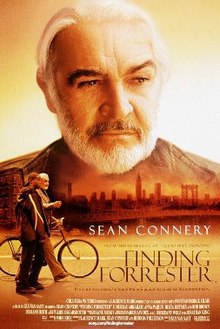


Comin' Thro' the Rye
"Comin' Thro' the Rye" is a poem written in 1782 by Robert Burns (1759–96). The words are put to the melody of the Scottish Minstrel Common' Frae The Town. This is a variant of the tune to which Auld Lang Syne is usually sung—the melodic shape is almost identical, the difference lying in the tempo and rhythm.
O, Jenny's a' weet,[A] poor body,
Jenny's seldom dry:
She draigl't[B] a' her petticoatie,
Comin thro' the rye!
Chorus:
Comin thro' the rye, poor body,
Comin thro' the rye,
She draigl't a' her petticoatie,
Comin thro' the rye!
Gin[C] a body meet a body
Comin thro' the rye,
Gin a body kiss a body,
Need a body cry?[D]
(chorus)
Gin a body meet a body
Comin thro' the glen
Gin a body kiss a body,
Need the warl'[E] ken?[F]
(chorus)
Gin a body meet a body
Comin thro' the grain;
Gin a body kiss a body,
The thing's a body's ain.[G]
(chorus)
Ilka lassie has her laddie,
Nane, they say, ha’e I
Yet all the lads they smile on me,
When comin' thro' the rye.

沒有留言:
張貼留言