Mark David Chapman
Mark David Chapman (born May 10, 1955) is an American murderer who killed John Lennon in New York City on December 8, 1980. Chapman shot Lennon outside the Dakota apartment building in Manhattan. Chapman fired at Lennon five times, hitting him four times in the back. Chapman remained at the crime scene and began reading J. D. Salinger's novel The Catcher in the Rye until the police arrived and arrested him. He repeatedly said that the novel was his statement.

CNN about this event
Inside the mind of John Lennon's killer
website: http://edition.cnn.com/2015/12/08/us/mark-david-chapman-lennon-interviews/
Hung jury
A hung jury or deadlocked jury is a judicial jury that cannot agree upon a verdict after extended deliberation and is unable to reach the required unanimity or supermajority.
This situation can occur only in common law legal system, because civil law systems either do not use juries at all or provide that the defendant is automatically acquitted if the majority or supermajority required for conviction is not reached during a single, solemn vote.


What Happens If There Is a Hung Jury \
The judge may direct them to deliberate further, usually no more than once or twice. If a verdict still cannot be delivered, at some point the judge will declare a mistrial due to the hung jury. (Mistrials can happen for other reasons, so when a trial ends in a mistrial, it is not necessarily due to a hung jury.
In the event of a mistrial, the defendant is not convicted, but neither is the defendant acquitted. An acquittal results from a Not Guilty verdict and cannot be appealed by the prosecution, overturned by the judge, or retried. When there is a mistrial, however, the case may be retried.
Since the 1824 case of United States v. Perez, Supreme Court precedent has held that retrial in the event of a mistrial is permissible. However, this ruling was not made on Constitutional grounds.
United States v. Perez
United States v. Josef Perez, 22 U.S. (Wheat 9) 579 (1824) is a case of the Supreme Court of the United States. The decision held that when a criminal trial results in a hung jury, the Double Jeopardy Clause of the fifth amendment does not prevent the defendant from being retried.
Josef Perez was tried for a capital offence. His trial originally resulted in a mistrial because the jury were unable to agree on a verdict. The judge dismissed the jury, and Perez' attorney claimed that Perez should be discharged since he had been tried once and not convicted.
Oliver Twist
Oliver Twist, or The Parish Boy's Progress, is the second novel by English author Charles Dickens and was first published as a serial 1837–39. The story is of the orphan Oliver Twist, who starts his life in a workhouse and is then sold into apprenticeship with an undertaker. He escapes from there and travels to London, where he meets the Artful Dodger, a member of a gang of juvenile pickpockets led by the elderly criminal, Fagin.
Oliver Twist is notable for its unromantic portrayal by Dickens of criminals and their sordid lives, as well as for exposing the cruel treatment of the many orphans in London in the mid-19th century. The alternate title, The Parish Boy's Progress, alludes to Bunyan's The Pilgrim's Progress, as well as the 18th-century caricature series by William Hogarth, A Rake's Progress and A Harlot's Progress.


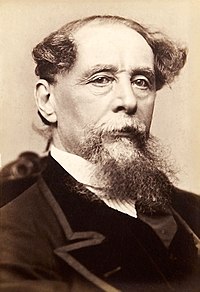
Charles Dickens
Charles John Huffam Dickens (/ˈdɪkᵻnz/; 7 February 1812 – 9 June 1870) was an English writer and social critic. He created some of the world's best-known fictional characters and is regarded by many as the greatest novelist of the Victorian era. His works enjoyed unprecedented popularity during his lifetime, and by the twentieth century critics and scholars had recognised him as a literary genius. His novels and short stories enjoy lasting popularity.
The Chimney Sweeper
"The Chimney Sweeper" is the title of a poem by William Blake, published in two parts in Songs of Innocence in 1789 and Songs of experience in 1794. The poem "The Chimney Sweeper" is set against the dark background of child labour that was prominent in England in the late 18th and 19th century. At the age of four and five, boys were sold to clean chimneys, due to their small size. These children were oppressed and had a diminutive existence that was socially accepted at the time. In the earlier poem, a young chimney sweeper recounts a dream had by one of his fellows, in which an angel rescues the boys from coffins and takes them to a sunny meadow; in the later poem, an apparently adult speaker encounters a child chimney sweeper abandoned in the snow while his parents are at church or possibly even suffered death where church is referring to being with God.


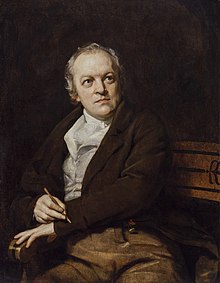
William Blake
William Blake (28 November 1757 – 12 August 1827) was an English poet, painter, and printmaker. Largely unrecognised during his lifetime, Blake is now considered a seminal figure in the history of the poetry and visual arts of the Romantic Age. His so-called prophetic works were said by 20th century critic Northrop Frye to form "what is in proportion to its merits the least read body of poetry in the English language". His visual artistry led 21st-century critic Jonathan Jones to proclaim him "far and away the greatest artist Britain has ever produced". In 2002, Blake was placed at number 38 in the BBC's poll of the 100 Greatest Britons. Although he lived in London his entire life (except for three years spent in Felpham), he produced a diverse and symbolically rich œuvre, which embraced the imagination as "the body of God" or "human existence itself".
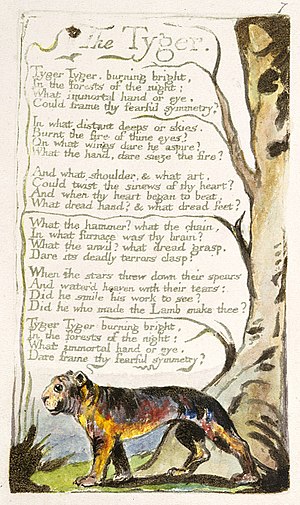
The Tyger
"Tyger Tyger" redirects here. For the Alfred Bester novel Tiger! Tiger!, see The Stars My Destination. For the Batman: The Animated Series episode, see Tyger Tyger (Batman: The Animated Series).
"The Tyger" is a poem by the English poet William Blake published in 1794 as part of the Songs of Experience collection. Literary critic Alfred Kazin calls it "the most famous of his poems", and The Cambridge Companion to William Blake says it is "the most anthologized poem in English". It is one of Blake's most reinterpreted and arranged works.
Tyger Tyger, burning bright,
In the forests of the night;
What immortal hand or eye,
Could frame thy fearful symmetry?
In what distant deeps or skies,
Burnt the fire of thine eyes?
On what wings dare he aspire?
What the hand, dare seize the fire?
And what shoulder, & what art,
Could twist the sinews of thy heart?
And when thy heart began to beat,
What dread hand? & what dread feet?
What the hammer? what the chain,
In what furnace was thy brain?
What the anvil? what dread grasp,
Dare its deadly terrors clasp!
When the stars threw down their spears
And water'd heaven with their tears:
Did he smile his work to see?
Did he who made the Lamb make thee?
Tyger Tyger burning bright,
In the forests of the night:
What immortal hand or eye,
Dare frame thy fearful symmetry?
In the forests of the night;
What immortal hand or eye,
Could frame thy fearful symmetry?
In what distant deeps or skies,
Burnt the fire of thine eyes?
On what wings dare he aspire?
What the hand, dare seize the fire?
And what shoulder, & what art,
Could twist the sinews of thy heart?
And when thy heart began to beat,
What dread hand? & what dread feet?
What the hammer? what the chain,
In what furnace was thy brain?
What the anvil? what dread grasp,
Dare its deadly terrors clasp!
When the stars threw down their spears
And water'd heaven with their tears:
Did he smile his work to see?
Did he who made the Lamb make thee?
Tyger Tyger burning bright,
In the forests of the night:
What immortal hand or eye,
Dare frame thy fearful symmetry?
"The Tyger" contains only six stanzas, and each stanza is four lines long. The first and last stanzas are the same, except for one word change: "could" becomes "dare."
To see a World in a Grain of Sand
To see a World in a Grain of Sand
And a Heaven in a Wild Flower,
Hold Infinity in the palm of your hand
And Eternity in an hour.

A Robin Redbreast in a Cage
Puts all Heaven in a Rage.
A dove house fill’d with doves and pigeons
Shudders Hell thro’ all its regions.
A Dog starv’d at his Master’s Gate
Predicts the ruin of the State.
A Horse misus’d upon the Road
Calls to Heaven for Human blood.
Each outcry of the hunted Hare
A fiber from the Brain does tear.

He who shall train the Horse to War
Shall never pass the Polar Bar.
The Beggar’s Dog and Widow’s Cat,
Feed them and thou wilt grow fat.
The Gnat that sings his Summer song
Poison gets from Slander’s tongue.
The poison of the Snake and Newt
Is the sweat of Envy’s Foot.

A truth that’s told with bad intent
Beats all the Lies you can invent.
It is right it should be so;
Man was made for Joy and Woe;
And when this we rightly know
Thro’ the World we safely go.

Every Night and every Morn
Some to Misery are Born.
Every Morn and every Night
Some are Born to sweet delight.
Some are Born to sweet delight,
Some are Born to Endless Night.
Great Smog of London
The Great Smog of London, or Great Smog of 1952 sometimes called the Big Smoke, was a severe air-pollution event that affected the British capital of London in December 1952. A period of cold weather, combined with an anticyclone and windless conditions, collected airborne pollutants – mostly arising from the use of coal – to form a thick layer of smog over the city. It lasted from Friday, 5 December to Tuesday, 9 December 1952 and then dispersed quickly when the weather changed.
It caused major disruption by reducing visibility and even penetrating indoor areas, far more severe than previous smog events experienced in the past, called "pea-soupers". Government medical reports in the following weeks, however, estimated that up until 8 December, 4,000 people had died as a direct result of the smog and 100,000 more were made ill by the smog's effects on the human respiratory tract. More recent research suggests that the total number of fatalities was considerably greater, about 12,000.
London had suffered since the 1200s from poor air quality, which worsened in the 1600s, but the Great Smog is known to be the worst air-pollution event in the history of the United Kingdom, and the most significant in terms of its effect on environmental research, government regulation, and public awareness of the relationship between air quality and health.It led to several changes in practices and regulations, including the Clean Air Act 1956.


Tomb Raider
Tomb Raider, styled as Lara Croft: Tomb Raider between 2001 and 2007, is a media franchise that originated with an action-adventure video game series created by British gaming company Core Design. Formerly owned by Eidos Interactive, then by Square Enix after their acquisition of Eidos in 2009, the franchise focuses on a fictional English archaeologist Lara Croft, who travels around the world searching for lost artifacts and infiltrating dangerous tombs and ruins. Croft was created by a team at Core Design that included Toby Gard. The gameplay generally focuses around action-adventure exploration of environments, solving puzzles, navigating hostile environments filled with traps, and fighting numerous enemies. Additional media has grown up around the theme in the form of film adaptations, comics and novels.


Memoir
A memoir (from French: mémoire: memoria, meaning memory or reminiscence) is a collection of memories that an individual writes about moments or events, both public or private, that took place in the subject's life. The assertions made in the work are understood to be factual. While memoir has historically been defined as a subcategory of biography or autobiography since the late 20th century, the genre is differentiated in form, presenting a narrowed focus. A biography or autobiography tells the story "of a life", while a memoir often tells "a story from a life", such as touchstone events and turning points from the author's life. The author of a memoir may be referred to as a memoirist or a memorialist.

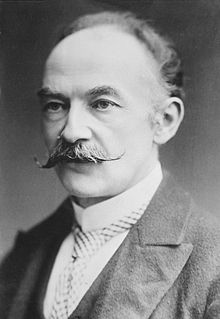
Thomas Hardy
Thomas Hardy, OM (2 June 1840 – 11 January 1928) was an English novelist and poet. A Victorian realist in the tradition of George Eliot, he was influenced both in his novels and in his poetry by Romanticism, especially William Wordsworth.He was highly critical of much in Victorian society, especially on the declining status of rural people in Britain, such as those from his native South West England.
While Hardy wrote poetry throughout his life and regarded himself primarily as a poet, his first collection was not published until 1898. Initially, therefore, he gained fame as the author of such novels as Far from the Madding Crowd (1874), The Mayor of Casterbridge (1886), Tess of the d'Urbervilles (1891), and Jude the Obscure (1895). During his lifetime, Hardy's poetry was acclaimed by younger poets (particularly the Georgians) who viewed him as a mentor. After his death his poems were lauded by Ezra Pound, W. H. Auden and Philip Larkin.
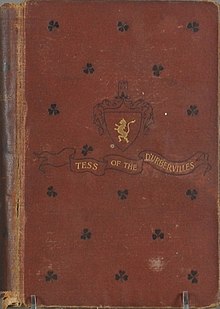
Tess of the d'Urbervilles: A Pure Woman Faithfully Presented is a novel by Thomas Hardy. It initially appeared in a censored and serialised version, published by the British illustrated newspaper The Graphic in 1891 and in book form in 1892. Though now considered a major nineteenth-century English novel and possibly Hardy's fictional masterpiece,[2] Tess of the d'Urbervilles received mixed reviews when it first appeared, in part because it challenged the sexual morals of late Victorian England.


website: https://www.youtube.com/watch?v=BwrA1Sg-pD8
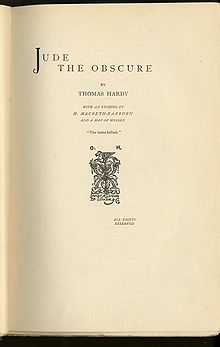
Jude the Obscure, the last completed novel by Thomas Hardy, began as a magazine serial in December 1894 and was first published in book form in 1895. Its protagonist, Jude Fawley, is a working-class young man, a stonemason, who dreams of becoming a scholar. The other main character is his cousin, Sue Bridehead, who is also his central love interest. The novel is concerned in particular with issues of class, education, religion and marriage.
While Hardy wrote poetry throughout his life and regarded himself primarily as a poet, his first collection was not published until 1898. Initially, therefore, he gained fame as the author of such novels as Far from the Madding Crowd (1874), The Mayor of Casterbridge (1886), Tess of the d'Urbervilles (1891), and Jude the Obscure (1895). During his lifetime, Hardy's poetry was acclaimed by younger poets (particularly the Georgians) who viewed him as a mentor. After his death his poems were lauded by Ezra Pound, W. H. Auden and Philip Larkin.
Tess of the d'urbervilles
Tess of the d'Urbervilles: A Pure Woman Faithfully Presented is a novel by Thomas Hardy. It initially appeared in a censored and serialised version, published by the British illustrated newspaper The Graphic in 1891 and in book form in 1892. Though now considered a major nineteenth-century English novel and possibly Hardy's fictional masterpiece,[2] Tess of the d'Urbervilles received mixed reviews when it first appeared, in part because it challenged the sexual morals of late Victorian England.
website: https://www.youtube.com/watch?v=BwrA1Sg-pD8
Judge the Obscure
Jude the Obscure, the last completed novel by Thomas Hardy, began as a magazine serial in December 1894 and was first published in book form in 1895. Its protagonist, Jude Fawley, is a working-class young man, a stonemason, who dreams of becoming a scholar. The other main character is his cousin, Sue Bridehead, who is also his central love interest. The novel is concerned in particular with issues of class, education, religion and marriage.Stonehenge
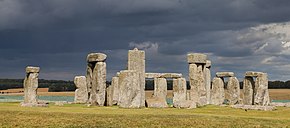
Stonehenge is a prehistoric monument in Wiltshire, England, 2 miles (3 km) west of Amesbury and 8 miles (13 km) north of Salisbury. It consists of a ring of standing stones, with each standing stone around 4.1 metres (13 ft) high, 2.1 metres (6 ft 11 in) wide and weighing around 25 tons. The stones are set within earthworks in the middle of the most dense complex of Neolithic and Bronze Age monuments in England, including several hundred burial mounds.

W. Somerset Maugham
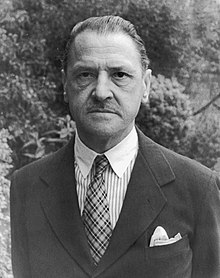
William Somerset Maugham CH (/ˈmɔːm/ MAWM; 25 January 1874 – 16 December 1965), better known as W. Somerset Maugham, was a British playwright, novelist and short story writer. He was among the most popular writers of his era and reputedly the highest-paid author during the 1930s.
After losing both his parents by the age of 10, Maugham was raised by a paternal uncle who was emotionally cold. Not wanting to become a lawyer like other men in his family, Maugham eventually trained and qualified as a physician. The initial run of his first novel, Liza of Lambeth (1897), sold out so rapidly that Maugham gave up medicine to write full-time.
Of Human Bondage
Of Human Bondage is a 1915 novel by W. Somerset Maugham. It is generally agreed to be his masterpiece and to be strongly autobiographical in nature, although Maugham stated, "This is a novel, not an autobiography, though much in it is autobiographical, more is pure invention." Maugham, who had originally planned to call his novel Beauty from Ashes, finally settled on a title taken from a section of Spinoza's Ethics. The Modern Library ranked Of Human Bondage No. 66 on its list of the 100 best English-language novels of the 20th century.

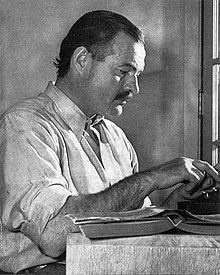

The Sun Also Rises is a 1926 novel written by American author Ernest Hemingway about a group of American and British expatriates who travel from Paris to the Festival of San Fermín in Pamplona to watch the running of the bulls and the bullfights. An early and enduring modernist novel, it received mixed reviews upon publication. Hemingway biographer Jeffrey Meyers writes that it is "recognized as Hemingway's greatest work", and Hemingway scholar Linda Wagner-Martin calls it his most important novel. The novel was published in the United States in October 1926 by the publishing house Scribner's. A year later, the London publishing house Jonathan Cape published the novel with the title of Fiesta. Since then it has been continuously in print.

Ernest Hemingway
Ernest Miller Hemingway (July 21, 1899 – July 2, 1961) was an American novelist, short story writer, and journalist. His economical and understated style had a strong influence on 20th-century fiction, while his life of adventure and his public image influenced later generations. Hemingway produced most of his work between the mid-1920s and the mid-1950s, and won the Nobel Prize in Literature in 1954. He published seven novels, six short story collections, and two non-fiction works. Additional works, including three novels, four short story collections, and three non-fiction works, were published posthumously. Many of his works are considered classics of American literature.A Farewell to Arms
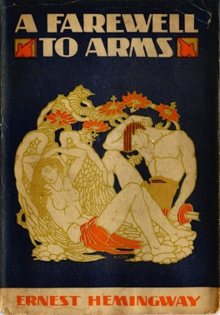
A Farewell to Arms is a novel by Ernest Hemingway set during the Italian campaign of World War I. The book, published in 1929, is a first-person account of American Frederic Henry, serving as a Lieutenant ("Tenente") in the ambulance corps of the Italian Army. The title is taken from a poem by 16th-century English dramatist George Peele.
A Farewell to Arms is about a love affair between the expatriate American Henry and Catherine Barkley against the backdrop of the First World War, cynical soldiers, fighting and the displacement of populations. The publication of A Farewell to Arms cemented Hemingway's stature as a modern American writer,[1] became his first best-seller,[2] and is described by biographer Michael Reynolds as "the premier American war novel from that debacle World War I."[3]
The Sun Also Rises
The Sun Also Rises is a 1926 novel written by American author Ernest Hemingway about a group of American and British expatriates who travel from Paris to the Festival of San Fermín in Pamplona to watch the running of the bulls and the bullfights. An early and enduring modernist novel, it received mixed reviews upon publication. Hemingway biographer Jeffrey Meyers writes that it is "recognized as Hemingway's greatest work", and Hemingway scholar Linda Wagner-Martin calls it his most important novel. The novel was published in the United States in October 1926 by the publishing house Scribner's. A year later, the London publishing house Jonathan Cape published the novel with the title of Fiesta. Since then it has been continuously in print.Emily Dickens
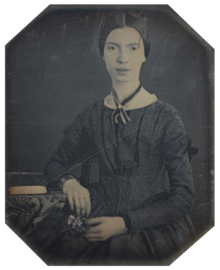
Dickinson was born in Amherst, Massachusetts. Although part of a prominent family with strong ties to its community, Dickinson lived much of her life in reclusive isolation. After studying at the Amherst Academy for seven years in her youth, she briefly attended the Mount Holyoke Female Seminary before returning to her family's house in Amherst. Considered an eccentric by locals, she developed a noted penchant for white clothing and became known for her reluctance to greet guests or, later in life, to even leave her bedroom. Dickinson never married, and most friendships between her and others depended entirely upon correspondence. Dickinson was a recluse for the later years of her life.
The Rime of the Ancient Mariner
The Rime of the Ancient Mariner (originally The Rime of the Ancyent Marinere) is the longest major poem by the English poet Samuel Taylor Coleridge, written in 1797–98 and published in 1798 in the first edition of Lyrical Ballads. Modern editions use a revised version printed in 1817 that featured a gloss. Along with other poems in Lyrical Ballads, it was a signal shift to modern poetry and the beginning of British Romantic literature.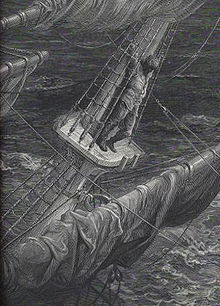
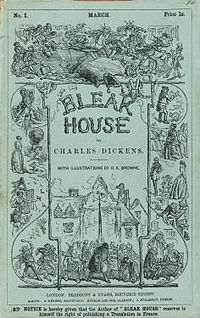
Bleak House
Bleak House is one of Charles Dickens's major novels, first published as a serial between March 1852 and September 1853. The novel has many characters and several sub-plots, and the story is told partly by the novel's heroine, Esther Summerson, and partly by an omniscient narrator. At the centre of Bleak House is a long-running legal case, Jarndyce and Jarndyce, which came about because someone wrote several conflicting wills. Dickens uses this case to satirise the English judicial system, and he makes use of his earlier experiences as a law clerk and as a litigant seeking to enforce copyright on his earlier books.
website: https://www.youtube.com/watch?v=uC1LoJ9KDQY
James Madison Jr., (March 16 [O.S. March 5], 1751 – June 28, 1836) was an American statesman and Founding Father who served as the fourth President of the United States from 1809 to 1817. He is hailed as the "Father of the Constitution" for his pivotal role in drafting and promoting the United States Constitution and the Bill of Rights.

Leukemia, also spelled leukaemia, is a group of cancers that usually begin in the bone marrow and result in high numbers of abnormal white blood cells. These white blood cells are not fully developed and are called blasts or leukemia cells]Symptoms may include bleeding and bruising problems, feeling tired, fever, and an increased risk of infections. These symptoms occur due to a lack of normal blood cells. Diagnosis is typically made by blood tests or bone marrow biopsy.




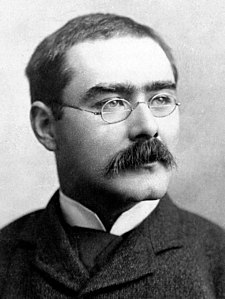
Rudyard Kipling
Joseph Rudyard Kipling 30 December 1865 – 18 January 1936) was an English journalist, short-story writer, poet, and novelist.
Kipling's works of fiction include The Jungle Book (1894), Kim (1901), and many short stories, including "The Man Who Would Be King" (1888).[2] His poems include "Mandalay" (1890), "Gunga Din" (1890), "The Gods of the Copybook Headings" (1919), "The White Man's Burden" (1899), and "If—" (1910). He is regarded as a major innovator in the art of the short story; his children's books are classics of children's literature, and one critic described his work as exhibiting "a versatile and luminous narrative gift".
The Way Through The Woods
| They shut the road through the woods |
| Seventy years ago. |
| Weather and rain have undone it again, |
| And now you would never know |
| There was once a road through the woods |
| Before they planted the trees. |
| It is underneath the coppice and heath |
| And the thin anemones. |
| Only the keeper sees |
| That, where the ring-dove broods, |
| And the badgers roll at ease, |
| There was once a road through the woods. |
| Yet, if you enter the woods |
| Of a summer evening late, |
| When the night-air cools on the trout-ringed pools |
| Where the otter whistles his mate, |
| (They fear not men in the woods, |
| Because the see so few) |
| You will hear the beat of a horse’s feet, |
| And the swish of a skirt in the dew, |
| Steadily cantering through |
| The misty solitudes, |
| As though they perfectly knew |
| The old lost road through the woods. . . . |
| But there is no road through the woods. |
website: https://www.youtube.com/watch?v=uC1LoJ9KDQY
James Madison
James Madison Jr., (March 16 [O.S. March 5], 1751 – June 28, 1836) was an American statesman and Founding Father who served as the fourth President of the United States from 1809 to 1817. He is hailed as the "Father of the Constitution" for his pivotal role in drafting and promoting the United States Constitution and the Bill of Rights.
Leukemia
Leukemia, also spelled leukaemia, is a group of cancers that usually begin in the bone marrow and result in high numbers of abnormal white blood cells. These white blood cells are not fully developed and are called blasts or leukemia cells]Symptoms may include bleeding and bruising problems, feeling tired, fever, and an increased risk of infections. These symptoms occur due to a lack of normal blood cells. Diagnosis is typically made by blood tests or bone marrow biopsy.Henry David Thorean
Henry David Thoreau (see name pronunciation; July 12, 1817 – May 6, 1862) was an American essayist, poet, philosopher, abolitionist, naturalist, tax resister, development critic, surveyor, and historian. A leading transcendentalist, Thoreau is best known for his book Walden, a reflection upon simple living in natural surroundings, and his essay "Civil Disobedience" (originally published as "Resistance to Civil Government"), an argument for disobedience to an unjust state.International Women's Day
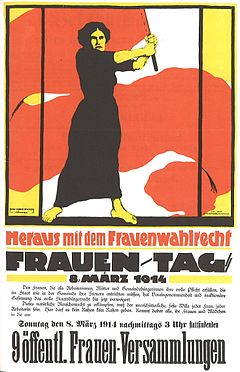
International Women's Day (IWD) is celebrated on March 8 every year. It commemorates the movement for women's rights.
The earliest Women's Day observance was held on February 28, 1909 in New York and organized by the Socialist Party of America. On March 8, 1917, in the capital of the Russian Empire, Petrograd, a demonstration of women textile workers began, covering the whole city. This was the beginning of the Russian Revolution. Seven days later, the Emperor of Russia Nicholas II abdicated and the provisional Government granted women the right to vote. March 8 was declared a national holiday in Soviet Russia in 1917. The day was predominantly celebrated by the socialist movement and communist countries until it was adopted in 1975 by the United Nations.

沒有留言:
張貼留言